Tuesday, March 31, 2015

Blog 3.E

Blog 3.E
All organisms must communicate with one another in order to survive and reproduce.

Bacteria and other microorganisms communicate so they don’t multiply too much and overcrowd a space, so they know when to reproduce, and more.

Multi cellular organisms communicate to know the whereabouts of other organisms, whether they be potential mates, prey or otherwise. They use a variety of methods to convey their methods. Wolves use chemicals (urine) and sound (howling) to let other animals know where they and their territory are.

They use sight, sun placement and weather patters to migrate and navigate so they don’t get lost or can move to an area with a preferable climate and recources.

Animals such as bears use scents to identify their young, find food and even to navigate.

The nervous system consists of the Central Nervous System and the Peripheral Nervous System. The CNS is the brain and spinal chord and the PNS are all the nerves branching off of them.

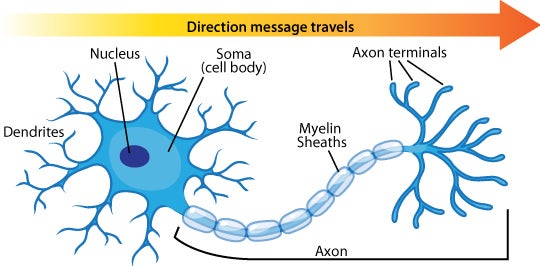
A neuron is a nerve cell that receives and transfers a neural signal. The signal enters the dendrites, which are around the cell body, transfer through the cell body, goes through the axon and out the axon terminal and over the synapse and into another cell’s dendrites.

Citations:

Monday, March 16, 2015

Blog 3.D

3. D. 1

1. Explain what factors are involved in cell communication.

Signal transduction: reception, transduction, response.

2. Explain why signal transduction process are generally under strong selective pressures. They need to tell the cell to do something and if the cell doesn’t or of the ligand signals the wrong cell to do the wrong thing then it could cause maaajor complications.

3. Explain how signal transduction pathways influence how the cell responds to the environment using Quorum Sensing as an example.

Cells send out signals via ligands which bind to receptors on the outside of the destined cell. These signals tell the cell what to do. Quorum sensing is used to sense how many bacteria are in the cell’s environment. Based on this, the cell will replicate, not replicate, or to or not to perform certain cell processes like attack a host or glow. One bacteria by itself or in a small group will hardly affect an organism but a significant number of bacteria could have a huge effect on it.


4. Why is signal transduction important? It is important because cells need to be able to communicate and respond to either their own or extracellular signals to keep themselves alive, their organism alive and more.

3.D.2

1. Explain cell to cell contact communication and give an example.
Contact-dependent signaling- an example is killer T cells destroying infected cells.

2. Explain cell communication over short distances and give an example.
This is called paracrine signaling and an example is neural signals, which leave the axon, hop a gap and enter the next dendrite through receptors on that dendrite. 

3. Explain cell communication when signals travel over a long distance and give an example.
This is called endocrine signaling and an example would be the adrenal glands sending adrenaline to the legs in preparation for a flight reaction.

3.D.3

1. How does signaling begin in a signal transduction pathway? It begins by a ligand attaching to a receptor.

2. Explain the ligand receptor relationship. What does it initiate?
The ligand-receptor relationship is the receptor on the cell’s exterior which binds to certain ligands, which are protein signals. It releases GDP which goes on to a few more processes and ultimately amplifies the ligand’s signal. It causes the cell to respond, also.

3. Explain a G protein linked receptor. It is linked to the receptor and when a ligand binds to it the G protein (GDP) turns into GTP and goes on to trigger other things like cAMP and amplifies the signal. 

4. Explain a ligand gated ion channel.
These need proteins (like sodium) to hook on and open the channel so ligands can pass through.

5. Explain receptor tyrosine kinases.
RTK: growth factor – binds and activates receptor/dimer – fills with phosphates- tyrosine- sends out signals to muscles etc

6. Signal transduction is the process by which a signal is converted to a cell response. Explain the entire process of signal transduction. Use the following terms (ligand, receptor, protein kinase, secondary messenger, phosphorylation, transduction, cell response)

The ligand- einepherine, for example, binds to a receptor which changes its shape and releases G protein, changing it to GTP. It goes to Adenolate cyclase makes cAMP – phosphorylation cascade amplifies the signal, which is to have the cells turn glycogen to glucose


3.D.4

1. Conditions where signal transduction is blocked or defective can alter cell response. Give an example of when this occurs. What happens?
Well, if the signal transduction pathway is blocked the effects are usually harmful to the cell. AN example would be how cholera secretes toxins that tell the cells to send water to the intestines, which causes excessive diarrhea and dehydrates the body/cells. It modifies the G protein so it can’t go back to GDP and the cells can’t stop signaling the water to quit going to the intestines.


Citations:
http://upload.wikimedia.org/wikipedia/commons/a/a4/1Signal_Transduction_Pathways_Model.jpg
http://www.scq.ubc.ca/conversing-at-the-cellular-level-an-introduction-to-signal-transduction/
http://www.ebi.ac.uk/interpro/potm/2005_9/Page2_files/image004.jpg


Friday, March 6, 2015

Blog 3A

3.C.1
1. Explain how alterations in a DNA sequence can lead to changes in the type or amount of the protein produced and the phenotype.
They can cause changes in the nucleotide sequences which can change the amino acids. This could possibly change the phenotype which would kill the organism or cause a simple change in the organism that could be an advantage or a disadvantage.

2. How can errors in DNA replication or DNA repair mechanisms, and external factors cause random changes.
The repair sequence could possibly change the original strand of DNA, making it a copy of the new strand. Radiation and carcinogens could also cause the DNA to mutate.

3. Explain how errors in mitosis or meiosis can result in changes in phenotype.
They can change the number of chromosomes and affect fertility and the phenotype. In plants, they could make a new type of plants, i.e one with thorns or without.

4. Explain how changes in genotype may affect phenotypes that are subject to natural selection.  Use the example antibiotic resistance mutations.
Mutations such as this cause the cell to produce enzymes that break down the antibiotics, therefore making the cell immune.

5. Genetic changes can enhance survival and reproduction. Explain how selection results in evolutionary changes.


3.C.2
1. What increases genetic variation? Eukaryotes: random mutation, random assortment, crossing over, random fertilization. Prokaryotes: random mutation. Bacterial conjugation, transformation, transduction.
2. Explain how the following increase variation: transformation, transduction, conjugation, and horizontal gene transfer.

3. How does sexual reproduction increase genetic variation? It causes the offspring to inherit its parents genetic information and also to combine and mix those chromosomes. It is a combination and mixture of the parents.


3.C.3
1. Explain how viruses replicate.
Viruses attach to bacterial and eukaryotic calls. They insert their genetic information and depending on what kind it is, the genetic information goes to the ribosomes or nucleus to be replicated. When the genetic information is replicated it uses the cell’s protein making mechanisms to make a new virus, over and over until the cell is full of viruses and lyses. The process repeats.

2. Explain the process of the lytic cycle.
Bacteria inserts its DNA into the host, the bacteria merges with the cell’s DNA, the DNA is replicated and through transcription in the host cell the ribosomes make copies of the virus until the virus load lyses the cell. The

3. Where do mutations occur during viral replication?
In the RNA.

4. Why do viruses have a higher rate of mutation? Because mistakes are easily made in transcription and the cell cannot check it for errors. And they replicate via RNA.

5. Explain HIV
HIV is an RNA virus that uses ribosomes in cells to replicate itself. It has a very high mutation rate so it is extremely difficult to cure.

6. How do viruses infect a host cell?
They latch onto the cell membrane and insert their genetic information which enters the nucleus an

7. What is a lysogenic(latent) infection? What can this result in?

It occurs when the viruses integrate their DNA into the host cell and the DNA is latent.

Tuesday, February 24, 2015


In order to express genes, others must be turned off while others are turned on. In every cell of an organism lies DNA. This DNA is generally identical throughout the organism; for example, a stem cell contains genes for hair and everything else but becomes a bone cell.

But sometimes it is necessary for cells to have mRNA replication inhibited so the cell isn’t producing excess enzymes and proteins, wasting valuable energy and potentially overwhelming the cell.  So yeah, things need to be shut off and on, sort of like a light switch. The genes that need to be turned on or off are on cells.


When an enzyme needs to be made for a certain situation and the

The regulatory gene is a gene before the operon that codes for a protein which controls the transcription of a gene or group of genes. This helps the RNA polymerase attach to the DNA strand. 

. The operon is the cluster of genes that needs to be regulated. It contains a promoter, an operator and the genes. Promoters
The operator is like a key’s hole near the steering wheel to start the engine of a vehicle. In order to start or stop it, a key is needed. The key is the repressor or activation protein that fits into the operator. In order to remove the key, an inducer (or, think of it like a hand) is needed to attach to it and change the shape so that the repressor will not work and the genetic information on an operon can transcribed.


Citations:

Tuesday, February 17, 2015

AP Bio 3.A review

3.A.1
1. Discuss how Watson, Crick, Wilkins, and Franklin contributed to the structure of DNA.
Watson & Crick: created a three-dimensional model of DNA based on Wilkins’ and Franklin’s data from their DNA X-rays.
Wilkins & Franklin: They worked on diffracting DNA with X-rays and discovered that DNA is in the form of a double helix.

2. Discuss the Avery-MacLeod-McCarthy Experiments.
They proved that Griffith’s experiment with mice and two strains of bacteria was the result of DNA transfer among the bacteria.

3. Discuss the Hershey-Chase Experiments.
They created an experiment that blended radioactive (yellow) proteins into bacteria. And
The results of this experiment further proved Avery, Macleod and McCarthy’s conclusion that DNA contains the information for heredity. 

4. Explain how genetic information is stored and passed on to generations.
Genetic information is stored in something called chromatid. Chromatid is a long dreand of genetic information called DNA, which is in the form of a double helix. This is contained within a membrane inside most cells (all eukaryotes) called the nucleus. If it isn’t in the nucleus, then it is just hanging out in the cell (prokaryotes). When the cell is ready to divide, the cell’s nucleus breaks down and the cell undergoes meiosis or mitosis, where the cell can multiply its chromosomes and divide. Sometimes the chromosomes swap pieces with other cells, called crossing over, and offspring are a genetic combination of their parents. This increases genetic diversity within a species.

5. Compare and contrast the DNA of eukaryotic and prokaryotic cells.
The DNA of eukaryotic cells is contained within a nucleus and have multiple linear chromosomes. Prokaryotic organisms/cells have circular chromosomes called plasmids. Sometimes bacteria have multiple plasmids and/or linear plasmids and/or linear chromosomes.

6. What are plasmids?
Plasmids are round, double stranded molecules of DNA that CAN be found in prokaryotes, eukaryotes and viruses, but not always. They are used in genetically modifying organisms.

7. Explain the process of DNA replication. Use a drawing to help explain.
8. Explain how retroviruses may have an alternate flow of information.
9. compare and contrast the structures of RNA and DNA.
Compare: Both have nucleotides, store genetic information, are in a strand form, can be replicated, copied and contain a 5-carbon sugar, adenine, cytosine, guanine and a phosphate.

Contrast:
DNA: in a double helix form, contains thymine, never leaves the nucleus, duplicates during Meiosis/mitosis, is passed on to daughter cells.

RNA: Comes in three forms- mRNA, tRNA, rRNA. Single stranded, contains uracil, can move inside and outside the nucleus, is temporary and copies DNA to transfer to the ribosomes to make proteins.

10. Explain the process of Transcription.  Use all enzymes involved and discuss the lagging and leading strands.
11. Explain what happens to mRNA once it leave the nucleus.
It travels to a ribosome where tRNA translates and codes for amino acids which are then linked together to make specific proteins. 

12. Discuss the process of translation. Include the essential organelle and all the steps involved to create the protein.
13. Discuss translation in prokaryotic cells.
14. Discuss how the following can manipulate DNA: electrophoresis, plasmid based transformation, restriction enzyme analysis of DNA, polymerase chain reaction.
15. Discuss how each of the products of genetic engineering were created: genetically modified foods, transgenic animals, cloned animals, human insulin.

3.A.2
1. Explain the steps of the cell cycle. Mitosis Gl: where the cell grows, DNA turns into chromatin and synthesizes mRNA and proteins. S phase: DNA is duplicated and checked over for errors at the checkpoint. G2:  rapid cell growth. Cytokinesis: the cytoplasm and its contents are divided and the chromosomes are divided into two daughter cells. In Meiosis this all happens again to produce four daughter cells.

2. Where are the checkpoints located and what do they do? They are located at the end of G1, the end of G2 and the end of the M phase. These checkpoints see if the cell is ready to divide and if the DNA is correctly replicated.

3. Explain the purpose of the MPF factor.
It’s a protein made of cyclin-dependent kinase and cyclin. It allows the cell to go into mitosis ONLY after the G2 checkpoint once the MPF accumulates past a certain amount.

4. Explain how the PDGF signals the cell cycle.
It keeps the cell from growing when no cell growth is needed. IT obtains signals from other cells or the environment and tells the cell if it needs to grow/multiply or not.

5. Explain how cancer occurs to a cell.
Cancer occurs when the cell cycle is disrupted and the cell reproduces abnormally fast, creating a mass of cancerous cells that must be surgically removed or burned/frozen off.

6. Discuss how cyclin and cyclin dependent kinases control the cell cycle.
These catalysts rise as the cell nears each check point. If the stuff rises past a certain point at the check point, then the cell will move on to the next phase of the cell cycle. If not, then the cell will repeat that phase until it is deemed ready to progress.

7. Explain the relationship between mitosis and interphase.
They are linked and mitosis alternates with interphase in the cell cycle. The interphase cycle pretty much prepares the cell to replicate in mitosis.

8. Discuss the key points of mitosis.
Mitosis is the process in which the cell’s nucleus divides. It consists of three major stages in interphase when the cell itself is not dividing- G1, where the cell grows and functions normally, the S phase, where the DNA is replicated and G2 is where the cell continues to grow and prepare for mitosis.

9. Discuss the key points of meiosis.
Meiosis 1: Where the cell divides the first time into two daughter cells.
Prophase 1: nuclear membrane breaks down and chromosomes become visible. Spindle fibers begin to extend and chromosomes pair up and cross over.
Metaphase: Crossing over is complete and spindle fibers pull one of each two chromosomes in each direction.
Anaphase: Cell begins to lengthen and the spindle fiber pulls the chromosomes all the way to the microtubules. Chromosomes are complete, diploid.


Telophase: the cell begins to split off into two daughter cells, each with a single complete set of chromosomes.
Cytokinesis: Cytoplasm undergoes cytokinesis, which replicates the organelles and cytoplasm before and as the cell splits into two daughter cells.

Meiosis 2: There are now two daughter cells.
Prophase 2: The spindle fibers replicate.
Metaphase 2: The chromosomes are moved to the center of the cells (metaphase plate) by the spindle fibers. Each half of the kinetochores in each of the chromosomes is bound to an opposite centromere.


Anaphase 2: The centromeres split the complete sister chromosomes and begin to pull them to their centromere poles.
Telophase 2: The centromeres are pulled to the poles, the nuclear envelope reforms and the two daughter cells split into four haploid daughter cells.

10. Discuss how meiosis creates genetic variation.
In meiosis, which is the replication of sex cells, the two parent cells’ chromosomes swap parts (pieces of the chromosome). This is called crossing over and mixes the parent cells’ information to create a new, genetically different cell.

3.A.3
1. Explain the rule of multiplication and addition.
You multiply and divide numbers before you add and subtract.

2. Explain the law of segregation.
Each parent contributes one of two alleles to its offspring so it produces a pair of alleles.

3. Explain the law of independent assortment.
Each pair of alleles segregates independently from other pairs during gamete formation. Like, they naturally pair up based on the gene each chromosome codes for or whatever.

4. How does segregation and independent assortment result in genetic variation.
They allow the pairs of chromosomes to match up and switch parts (cross over).

5. Give an example of a genetic disorder and explain the disorder.
Sickle cell anemia occurs when someone has two copies of the sickle cell gene. The sickle cell gene causes blood cells to take on a crescent moon (sickle) cell shape, which inhibits the cell’s ability to transfer oxygen and move around the body.

6. Give an example of a chromosomal disorder and explain the disorder.
Down syndrome or trisomy 21 occurs when there is a third piece of chromosome 21 in the DNA. It causes mental problems, odd facial features and other health problems. 

7. Explain nondisjunction.
Nondisjunction is when the chromosome doesn’t separate in half correctly during meiosis. Missing, extra and even complete chromosomes are sent to the daughter cells instead of the complete halves.

8. Explain why there are ethical, social and medical issues surrounding human genetic disorders?
Well, if you know you have a genetic problem then it could make it harder for you to find a lover, get health insurance, live life to the fullest, etc. You would also have to live with knowing any children you may have could inherit the genetic roblem.

3.A.4
1. Explain why Mendel’s laws do not apply to all traits.
Not all traits are dominant and recessive for one gene. At times there are co-dominant, where both or more genes mix together and express in a mixed way and incomplete dominant, where genes for a trait show at one time in patches like black and white cows.

2. What are sex-linked traits?
Sex linked traits are traits that typically only show on male or female genes. An example is the trait for color blindness which is only on the X chromosome. They can also be expressed differently or not expressed based on gender.

3. What is nonnuclear inheritance? Give an example for plants and one for animals.
Mitochondrial DNA (animal & plant) and chloroplasts (plant only) contain their own DNA (mtDNA and cpDNA). They are randomly given to the gamete.


Citations: